


Which Type of Lens Is Best for Cataract Surgery?
If you’ve been told you need cataract surgery, the surgery itself usually isn’t what will keep you up at night. It’s the lens. Your doctor takes out the cloudy natural lens and puts in an artificial one, called an intraocular lens or IOL and that one stays in your eye for good. So yes, it’s a decision worth a little thought.
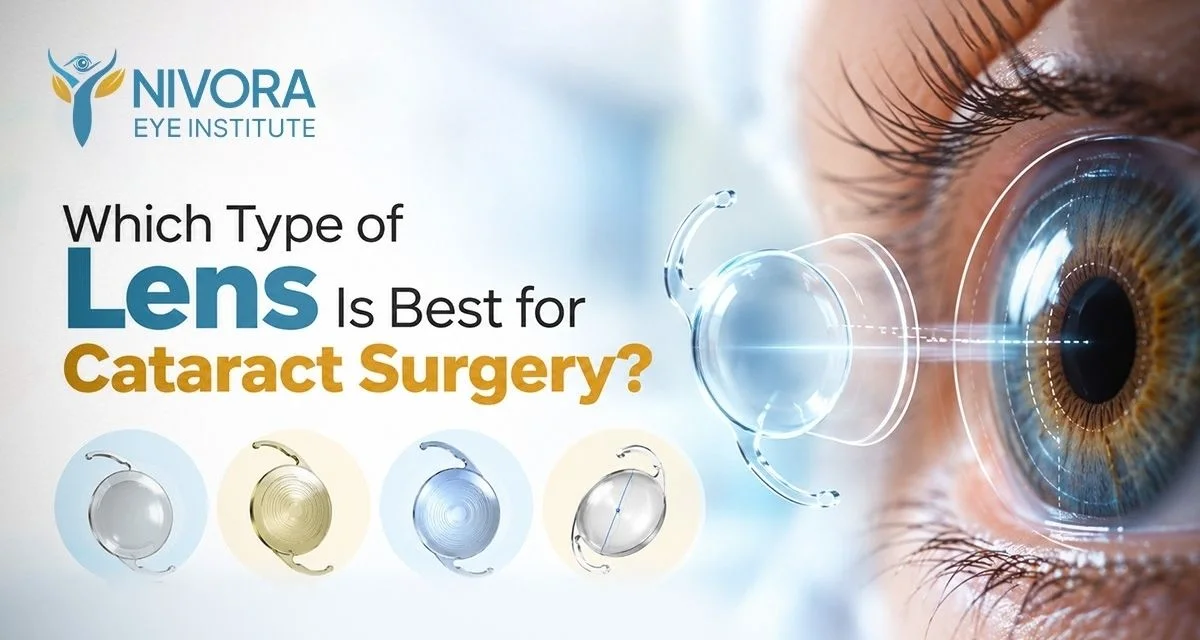
There isn’t one lens that’s best for everyone. A monofocal lens gives sharp vision at one distance, a multifocal or EDOF lens reduces the need for glasses at more than one distance, and a toric lens corrects astigmatism. The right pick depends on your eyes, daily routine and budget.
The choices are fewer than they first sound. Here’s what each lens does, where it falls short and how to match one to your life.
What Does the Lens Actually Do?
Think of the IOL as the new focusing part of your eye. Before surgery, the surgeon measures the length of your eye and the curve of your cornea to work out the power you need. Get that right, and you see clearly at a chosen distance. The type of lens decides which distances come into focus and whether something else, like astigmatism, gets corrected along the way.
Main Types of Lenses for Cataract Surgery
• Monofocal — One focus point, usually set for distance. You’d see far away clearly and need reading glasses for close work. It’s the most common choice, and it tends to cause the fewest glare or halo problems
• Toric — Built to correct astigmatism. Without it, astigmatism can stick around after surgery and keep things blurry. The lens has to sit at the right angle, so the surgeon plans that carefully.
• Multifocal — Gives you near, intermediate, and far vision in one lens so you lean less on glasses. The trade-off is that some people notice halos or glare around lights at night, and contrast can drop a little.
• EDOF (enhanced depth of focus) — Stretches the range of clear vision, mainly from far to arm’s length. That suits computer work and everyday tasks. Very small print may still need glasses.
If you’d like to understand how the operation itself is done, this post on the different types of cataract surgery walks through the techniques.
How to Choose a Cataract Surgery Lens
Start with your routine. Someone who reads, sews or spends the day on a phone needs something different from a person who mostly drives and watches TV. Then think about how you feel about glasses. If popping on readers doesn’t bother you, a monofocal is a simple answer. If you’d rather not, multifocal and EDOF are worth considering, though no lens can promise you’ll never need glasses again.
Astigmatism comes next. If you have it, a toric lens (or another way of correcting it) should be on the table.
Remember, your overall eye health matters just as much. Conditions like macular degeneration, glaucoma, a scarred cornea or past retinal problems can make a multifocal lens a poor fit. Diabetes is another one to mention, and the post on cataract surgery with diabetes covers what to keep in mind.
Money is part of it too. Premium lenses usually cost more, and insurance doesn’t always cover the difference, so ask early.
So, What’s the Best Lens for Cataract Surgery for You?
Honestly, there isn’t one best lens for cataract surgery that works for everybody. It comes down to what you want your eyes to do. A person who wants crisp distance vision and doesn’t mind readers usually does well with a monofocal. Someone with a lot of astigmatism often needs a toric to get the full benefit. If you’re on a laptop most of the day, EDOF can feel comfortable at that range. And if cutting down on glasses matters more to you than a bit of night-time glare, a multifocal might make sense, as long as your eyes are healthy enough for it.
None of this is a rule, which is why your surgeon’s exam carries more weight than any article.
Questions Worth Asking Before Surgery
A good cataract treatment hospital will check your cornea and retina, measure your eye carefully and explain the options in simple and understandable words before suggesting a lens. Still, it helps to walk in with a few questions of your own, such as:
• Which lens do you recommend for my eyes and why?
• Will I still need glasses for reading or computer work?
• Are my cornea and retina healthy enough for a multifocal or EDOF lens?
• What side effects, like halos, should I expect?
• What does each option cost and what’s included?
Does the Lens Change How Surgery Goes?
Not much. The steps are broadly the same whichever lens goes in — local anaesthesia, a tiny cut, the cloudy lens broken up and removed, and the new one placed. What changes is the planning beforehand, since premium lenses need more precise measurements. Recovery depends more on your eye and how well you follow aftercare than on the lens itself. If you’re still unsure about timing, this guide on when is the right time for cataract surgery can help.
Conclusion
Picking a lens isn’t about finding a winner. It’s about matching what a lens can do to what your eyes and your daily activities actually need. At Nivora Eye Hospital, patients can discuss monofocal, toric, multifocal, and EDOF lenses with an eye specialist to understand the benefits and limitations of each option.
Take your time, since the lens is meant to last. Get your eyes checked properly, ask the questions and be honest about how you use your vision. Remember, a choice made that way is far more likely to leave you happy with the result.