

Satisfied Patients
Years of Experience
Rated on Google
Keratoconus is a progressive eye disease in which the normally spherical cornea of an eye thins & starts to bulge into a cone shape. This results in abnormal vision.
Keratoconus, if uncorrected, can result in severe visual impairment.
At Nivora Eye Institute, we deliver complete keratoconus management through our advanced diagnostics, customized treatment strategies & innovative interventions.
Our goal is to stabilize the cornea, enhance your vision & recover your quality of life with minimal risk of recurrence.
Early detection is essential as early treatment can halt progression & often prevent the necessity of more extensive procedures such as corneal transplantation.
At Nivora, our attention is personalized, patient-centric & technologically advanced with the best results for every patient.
We start with a thorough corneal examination with the latest imaging & topography technology to identify even the slightest changes in corneal shape & thickness. Tests conducted are
• Corneal topography & tomography
• Pachymetry (thickness mapping of the cornea)
• Wavefront analysis for higher-order aberrations
• Visual acuity & refraction testing
Treatment of keratoconus is never a one-size-fits-all. Based on your situation, we might prescribe
• Speciality Contact Lenses
Scleral or rigid gas-permeable (RGP) lenses for better vision
• Corneal Cross-Linking (CXL)
A painless procedure to strengthen & stabilize the cornea
Stops progression of corneal distortion
Speciality lenses or personalized procedures eliminate blurriness & distortion
Low-risk or non-surgical treatments like cross-linking maintain the cornea
Each patient is provided with a plan specifically tailored for their corneal shape & condition of keratoconus
Eliminate the reliance on thick glasses or uncomfortable lenses
Early intervention normally prevents corneal transplantation
Our ophthalmologists are experienced in treating all stages of keratoconus from mild to severe

A medical procedure that strengthens the cornea using UV light & riboflavin drops, helping prevent keratoconus progression & improving long-term corneal stability.
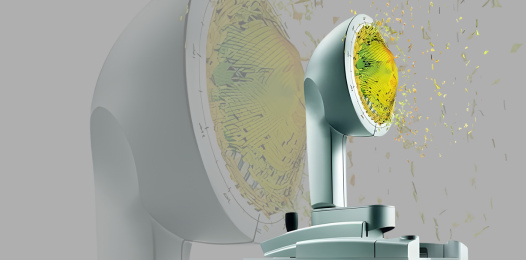
An advanced laser procedure that reshapes the cornea based on detailed topography maps, enhancing visual clarity & correcting irregularities for sharper, personalized vision.

Specially designed lenses tailored to individual corneal shapes, providing superior comfort, clearer vision, & effective correction for complex refractive errors or irregular corneas.
Since the cornea is the eye’s outermost layer, it contributes nearly 70% of its focusing power. Even minor changes in corneal shape can affect vision dramatically.
| Stage | What Happens | What You Can Expect |
|---|---|---|
| Comprehensive Evaluation | Corneal imaging, topography, pachymetry & vision tests | Detects early keratoconus & determines its severity |
| Customized Treatment Plan | Options may include contact lenses or corneal cross-linking (CXL) treatment | Plan is tailored to your unique corneal shape & vision requirements |
| Intervention / Procedure | Lens fitting or cross-linking as needed | Minimally invasive, highly precise & safe procedures |
| Post-Treatment Care | Use of prescribed eye drops, protective eyewear & regular follow-ups | Ensures smooth healing & long-term corneal stability |
| Long-Term Monitoring | Routine corneal imaging & vision check-ups | Allows early detection of any changes & prevents progression |
What Happens: Corneal imaging, topography, pachymetry & vision tests
Notes / What You Should Know: Detects early keratoconus & determines its severity
What Happens: Options may include contact lenses or corneal cross-linking (CXL) treatment
Notes / What You Should Know: Plan is tailored to your unique corneal shape & vision requirements
What Happens:Lens fitting or cross-linking as needed
Notes / What You Should Know: Minimally invasive, highly precise & safe procedures
What Happens: Use of prescribed eye drops, protective eyewear & regular follow-ups
Notes / What You Should Know: Ensures smooth healing & long-term corneal stability
What Happens: Routine corneal imaging & vision check-ups
Notes / What You Should Know: Allows early detection of any changes & prevents progression
Experienced with complex keratoconus treatment & surgery
Advanced imaging for accurate detection & monitoring of corneal alterations
Personalized treatment plans depending on severity, lifestyle & visual requirements
Corneal cross-linking & specialty lenses minimize risk & speed recovery
Long-term & ongoing care ensures stability & prevents worsening
Education, comfort & open communication are our priority
