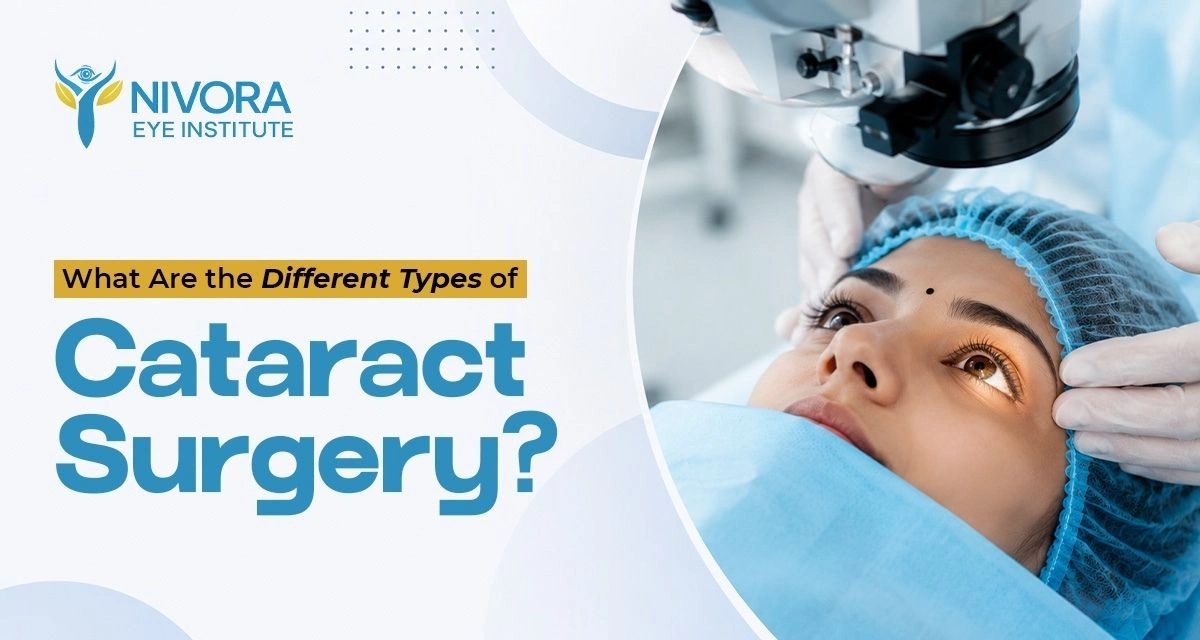
What Are the Different Types of Cataract Surgery?
In case you’ve been searching for LASIK and always seem to come across the expression "Contoura Vision", you’re among many individuals who have had their curiosity aroused. Contoura Vision has been among the top advancements in LASIK eye surgery over the past few years but not many individuals are aware of its differences with traditional LASIK or even if it is a relevant solution to be considered.
Thus for you to have a more informed conversation with your eye doctor when you're deciding what's right for you, here's a clear, honest breakdown of what Contoura Vision LASIK actually is, how it works and how it compares to standard LASIK.
What Is Standard LASIK?
Cataract surgery removes the eye's clouded natural lens and replaces it with an artificial one. The main types are Extracapsular Cataract Extraction (ECCE), Femtosecond Laser-Assisted Cataract Surgery (FLACS) and Intracapsular Cataract Extraction (ICCE) with modern phacoemulsification being the most widely used today.
If you've been told you have a cataract, one of the first questions that probably comes to mind is what the surgery actually involves. And honestly, that's a fair question, because cataract surgery isn't just one fixed procedure. There are a few different techniques and which one a surgeon recommends usually depends on how advanced the cataract is, the condition of your eye and the equipment available at the hospital you choose.
Thus, this blog breaks down the main types of cataract surgery so you know exactly what to expect before you sit down for a consultation.
What Is Cataract Surgery and When Is It Needed?
A cataract is basically clouding of the eye's natural lens. Over time, the lens that's normally clear starts to turn foggy and this blocks light from properly reaching the retina. The result is blurry vision, trouble seeing at night, glare from headlights or sunlight and colours that look faded or yellowish. Cataract surgery is the only real fix for this — there's no eye drop or medicine that reverses a cataract once it's formed.
You'd typically need this surgery when:
• Your vision has become blurry enough to affect reading, driving or recognising faces
• You're struggling with night driving because of glare and halos around lights
• Your glasses prescription keeps changing every few months
• Routine eye check-ups show cataract development that's affecting your daily life
Most people don't need surgery the moment a cataract is detected. Doctors usually monitor it first and only recommend surgery once it starts genuinely interfering with your day-to-day activities.
How Does Cataract Eye Surgery Work?
At its core, cataract eye surgery works on a fairly simple principle — take out the cloudy lens, put in a clear artificial one. The artificial lens is called an intraocular lens or IOL and it stays in your eye permanently.
The general process goes something like this:
• The surgeon numbs the eye with local anaesthesia (so you're awake but won't feel pain)
• Then he makes a very small incision, breaks up the cloudy lens, removes it and then places the new IOL in position.
Now because the incisions used today are so tiny, most patients don't need stitches and the whole thing is usually done within 15 to 30 minutes per eye. It's a same-day procedure in the vast majority of cases — you go home a few hours after surgery, not after an overnight hospital stay.
What Are the Different Types of Cataract Surgery?
Now to the main part. There are a few recognised types of cataract surgery and while the end goal is the same for all of them — removing the cataract and restoring clear vision — the technique used to get there differs quite a bit.
Extracapsular Cataract Extraction (ECCE)
This is one of the older, more traditional methods. In ECCE, the surgeon makes a slightly larger incision and removes the cloudy lens in one whole piece, while leaving the back part of the lens capsule intact to support the new IOL. Because the incision is bigger than what's used in modern procedures, recovery tends to take a little longer and there's usually a stitch or two involved.
ECCE is still used in certain cases especially where the cataract is very hard or dense but it's largely been replaced by smaller-incision techniques for routine cases.
Femtosecond Laser-Assisted Cataract Surgery (FLACS)
FLACS uses a laser to perform some of the more precise steps of the surgery — like creating the opening in the lens capsule and softening the cataract — before the surgeon completes the rest of the procedure. The idea behind this approach is that a laser can make certain cuts with a level of consistency that's difficult to match by hand alone which some surgeons find useful in complex cases or when treating astigmatism alongside the cataract.
It's a newer, more specialised addition to the cataract surgery toolkit and not every eye hospital is equipped for it.
Intracapsular Cataract Extraction (ICCE)
ICCE is the oldest of the three and involves removing the entire lens, capsule included, through a fairly large incision. It's rarely performed today because it comes with a longer recovery period and a higher chance of complications compared to newer techniques.
You'll mostly find ICCE used in very specific situations such as when the lens is dislocated or unstable, rather than as a routine option.
Of these, the technique that's actually shaped modern cataract care the most is phacoemulsification — a refined, minimally invasive evolution of these older approaches, where the cataract is broken up using ultrasonic vibrations and removed through a very small incision. This is the foundation of most advanced cataract surgery performed today including at hospitals using micro-incision and AI-assisted systems.
Why Choose Nivora Eye Hospitals for Cataract Surgery?
Picking the right cataract treatment hospital matters just as much as picking the right technique because the outcome depends heavily on the surgeon's skill and the technology backing them up. At Nivora Eye Hospital, cataract procedures are performed using advanced, minimally invasive methods rather than older, larger-incision techniques.
A few things that set the experience apart at Nivora:
• Zepto-assisted cataract surgery for improved precision and safety
• Micro-Incision Cataract Surgery (MICS) which uses one of the smallest incision sizes available, reducing trauma to the eye
• The AI-enabled CENTURION® Vision System which maintains stable eye pressure throughout the procedure using Active Fluidics™ technology, along with real-time monitoring through its AI SENTRY® handpiece
• A choice of premium IOLs including monofocal, multifocal, toric and EDOF lenses, based on your lifestyle and vision needs
• Same-day discharge for most patients with a team that's performed over 30,000 successful cataract surgeries
If you're weighing your options, it's worth reading our earlier post on when the right time for cataract surgery actually is which goes into the signs and timing in more detail.
How Long Does It Take to Recover After Cataract Surgery?
Recovery from modern cataract surgery is usually much quicker than people expect. Most patients notice a visible improvement in their vision within a day or two and many resume light daily activities — like walking around the house or reading — almost immediately. That said, full healing does take a few weeks, during which your doctor will likely ask you to avoid heavy lifting, swimming and rubbing the eye and to use prescribed eye drops as directed.
Older techniques like ECCE and ICCE, because they involve larger incisions, generally come with a longer downtime and more restrictions in the early days. This is one of the biggest reasons modern, smaller-incision approaches have become the preferred choice for most patients including elderly patients. If you're researching this on behalf of an older family member, our blog on cataract surgery for senior citizens covers the safety side of things specifically for that age group.
Conclusion
Cataract surgery has come a long way from the larger-incision procedures of the past. While ECCE and ICCE still have their place in specific, complicated cases, most people today undergo some form of minimally invasive, phaco-based surgery that gets them back to clear vision within days rather than weeks. What matters most isn't memorising the technical names of each technique — it's choosing a hospital and surgeon who can tell you, based on your specific eye which approach makes the most sense for you.
This is exactly where Nivora Eye Hospital fits in. With over 37 years of experience and more than 30,000 successful cataract surgeries, Nivora has built its cataract program around the technology that matters most today — Zepto-assisted precision, Micro-Incision Cataract Surgery for minimal trauma and the AI-enabled CENTURION® Vision System for stability and safety even in complex cases. Add to that a team of experienced surgeons, a wide range of premium IOL options tailored to individual lifestyles and dedicated post-operative follow-up and it's easy to see why Nivora continues to be a trusted name for cataract care in Dehradun and across Uttarakhand.
Whether you're exploring your options for the first time or looking for a second opinion, Nivora's team can guide you toward the surgical approach that's genuinely right for your eyes.
FAQs
1. What is the safest type of cataract surgery?
For most patients, modern minimally invasive phaco-based surgery (including techniques like Zepto-assisted and MICS) is considered the safest, thanks to its tiny incisions, quick recovery and lower complication rates compared to older methods like ECCE or ICCE.
2. Is cataract eye surgery painful?
No, not really. The eye is numbed with local anaesthesia before the procedure so patients don't feel pain during surgery. Some mild irritation or dryness afterward is normal but usually settles within a few days.
3. How long does cataract surgery take?
Most modern cataract procedures take around 15 to 30 minutes per eye and patients typically go home the same day.
4. How soon can I return to normal activities after cataract surgery?
Many patients resume light activities like walking and reading within a day or two. Full recovery usually takes a few weeks.
5. Which lens is best after cataract surgery?
It depends on your lifestyle. Monofocal lenses are good for clear distance vision, multifocal lenses reduce dependence on glasses for near and far vision, toric lenses correct astigmatism and EDOF lenses offer a good balance for intermediate vision. Your surgeon can help you pick based on your daily needs.
6. When should I visit an eye hospital for cataract surgery in Dehradun?
If you're noticing blurry vision, glare while driving at night, frequent changes in your glasses prescription or faded colours then it's time to get evaluated. You don't have to wait until your vision is severely affected — early consultation helps plan the right treatment timing.