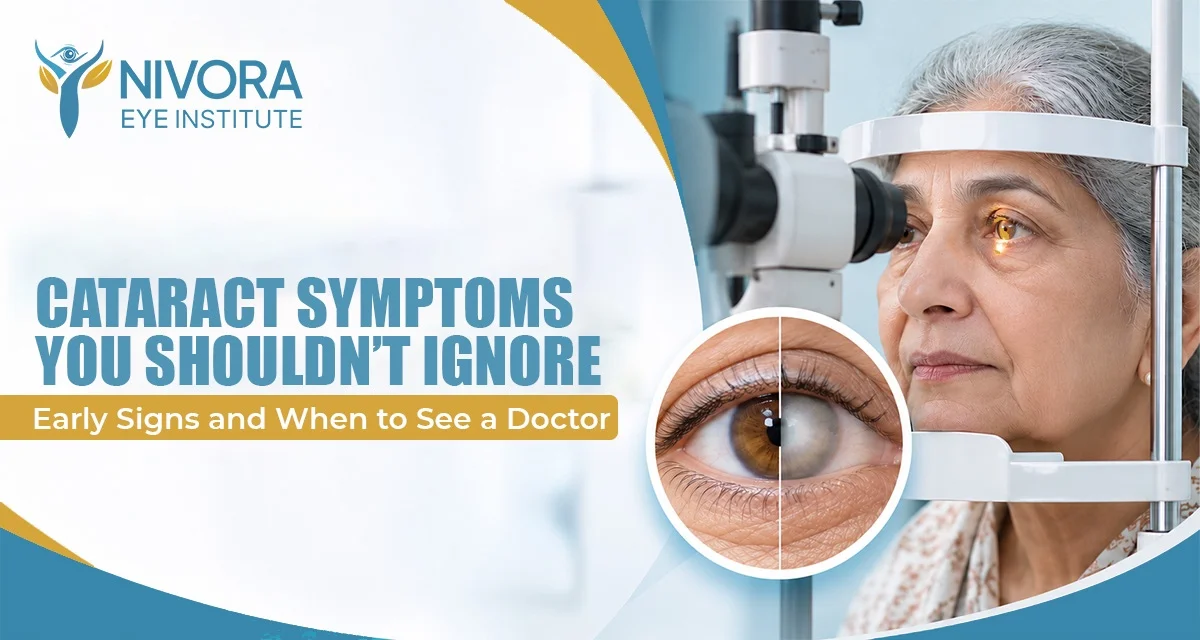
Cataract Symptoms You Shouldn’t Ignore
A slightly foggy view is easy to blame on tired eyes, an old pair of glasses or simply getting older. Sometimes that is all it is. When the haze doesn’t clear, though, a cataract may be the reason and cataracts rarely announce themselves. They build up quietly over months or even years.
Cataract symptoms usually include cloudy or blurred vision, glare around lights, faded colours and trouble seeing at night. These changes appear slowly so they are easy to miss. If your vision keeps worsening even after a glasses change, book a detailed eye examination with an ophthalmologist.
What Is a Cataract?
The lens of the eye sits just behind the pupil. It is clear and its job is to bend incoming light so that it lands sharply on the retina. Over time, the proteins inside the lens start to clump together and the lens slowly turns cloudy. Light no longer passes through cleanly so the picture you see becomes dull or blurred.
A cataract is not a film growing over the surface of the eye and it does not spread from one eye to the other. Both eyes can be affected, usually at different speeds. A general overview of the condition is available on the cataract disease page.
Early Signs of Cataracts People Often Overlook
In the beginning, the changes are so mild that most people simply adjust to them. Some of the common ones are:
• Vision that looks slightly hazy or blurry, as if you are looking through a dusty window
• Colours that seem faded or have a yellow-brown tint
• Glare from sunlight or halos around bulbs and headlights
• Difficulty seeing in dim light, especially while driving at night
• A glasses prescription that keeps changing within a short time
• Double vision in one eye that stays even when the other eye is covered
Some people with a particular type of cataract even find that their near vision improves for a while so reading feels easier without glasses. This is sometimes called “second sight.” It feels like good news but it doesn’t last and the blur returns as the cataract grows.
How Cataract Symptoms Progress Over Time
As cataract symptoms get worse, ordinary tasks start taking more effort. Reading the newspaper needs stronger light. Recognising a familiar face across the room becomes harder. Steps and kerbs may look flat, which raises the risk of a fall and driving after dark may stop feeling safe at all.
In advanced cases, the lens can turn dense and brownish and the pupil may look white or grey when seen up close. By then, vision is usually quite poor and surgery can also be more complicated.
Who Is More Likely to Get a Cataract?
Age is the biggest factor and most cases are seen after 50. It isn’t the only one, though. Diabetes, long-term smoking, years of strong sunlight without UV-protected sunglasses, prolonged use of steroid medicines, an earlier eye injury or surgery and a family history can all raise the chances. Cataracts can also occur in babies and young children but that is far less common.
People with diabetes often develop them earlier and need some extra care around surgery — something that we have covered in Cataract Surgery with Diabetes — What Precautions Do You Need?
Is It a Cataract or Something Else?
Blurred vision doesn’t always point to a cataract. Dry eyes, uncorrected glasses power, glaucoma, diabetic retinopathy and macular problems can all feel similar. Guessing at home doesn’t work and only an examination can tell them apart.
When to See an Eye Doctor
Book a routine appointment if:
• The haze has stayed for more than a few weeks
• You need much brighter light than before to read or do close work
• Glare or poor night vision is getting in the way of your daily routine
Some changes shouldn’t wait for an appointment slot. Get urgent care for sudden loss of vision, eye pain, redness with reduced vision, flashes of light, a sudden burst of new floaters or sudden double vision. A slowly growing cataract doesn’t usually cause these and they can point to conditions like retinal detachment that need quick attention.
Adults above 40 benefit from an occasional eye check even without complaints. Many doctors suggest yearly exams after 60 or sooner for people with diabetes.
What Happens During the Eye Check-Up
The visit is simpler than most people expect. You will read an eye chart and the doctor will examine the front of the eye under a special microscope called a slit lamp. Drops are then used to widen the pupil so the lens and the retina at the back can be seen properly. If a cataract is found, some measurements of the eye may also be taken, which help later if surgery is planned. Your vision stays blurry for a few hours after the drops so it is wise to bring someone along.
How Cataracts Are Treated
In the early stage, a change of glasses, an anti-glare coating and brighter reading light may be enough for a while. No eye drops or tablets have been proven to clear a cataract. Surgery is the only way to remove it. The cloudy lens is taken out and replaced with a clear artificial lens, usually as a day-care procedure.
The right time depends on how much the blur interferes with your life, not on how the cataract looks. Our previous blog, When Is the Right Time for Cataract Surgery? looks at this in more detail and Which Type of Lens Is Best for Cataract Surgery? covers the lens options.
Also, when you are choosing a cataract treatment hospital, it is reasonable to ask about its diagnostic equipment, its operation theatre standards and how follow-up visits are handled.
Can Cataracts Be Prevented?
Age-related cataracts can’t be fully prevented but a few habits may help delay them. These include wearing UV-protected sunglasses outdoors, not smoking, keeping blood sugar under control, eating plenty of fruits and vegetables and getting regular eye exams.
Conclusion
Cataracts develop slowly, which is exactly why they get ignored. A hazy view, glare at night or a glasses prescription that keeps changing deserves a proper check rather than a wait-and-see approach. Catching the problem early gives you more options and more time to decide. An eye examination is simple and usually painless and it answers the question one way or the other. If something about your vision feels off, we would encourage you to get it examined sooner rather than later.
Disclaimer: This blog is for general awareness only and is not a substitute for professional medical advice, diagnosis or treatment. Eye conditions vary from person to person so please consult a qualified ophthalmologist about your own situation.