

What Tests Are Required Before LASIK Eye Surgery?
The laser part of LASIK takes only a few minutes per eye. What surprises many people is how much happens before that day. You can’t just walk in, sit down and get treated. First, your eyes have to be studied closely because the shape, thickness and health of each one decide what’s safe for you.
If you’re planning to go ahead, this guide covers the tests before LASIK eye surgery, why each one matters and how to get ready for the appointment.
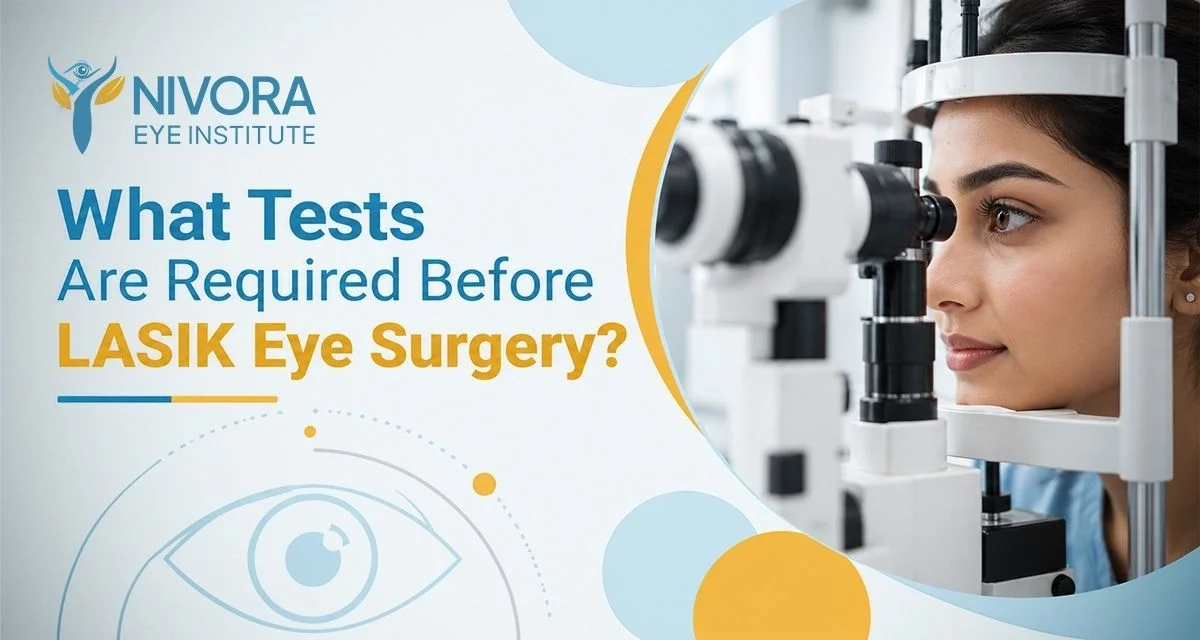
Before LASIK, you’ll need a full eye exam that includes a prescription check, corneal mapping, corneal thickness measurement, pupil size, eye pressure, a dry eye assessment and a dilated retina exam. Together, they show whether your eyes are suitable. The visit usually takes a few hours.
The Main Tests Before LASIK Eye Surgery
Before suggesting anything, the doctor asks about your health, any medicines you take, how long you’ve worn glasses or contacts and what your days look like? Then come the tests:
• Refraction. This measures your actual prescription. Sometimes dilating drops are used so your eye can’t “cheat” by focusing which gives a truer reading.
• Corneal mapping (topography or tomography). A scan builds a detailed map of the cornea’s shape. It can pick up early signs of keratoconus and other irregular shapes that would make LASIK unsafe.
• Corneal thickness (pachymetry). This measures how thick your cornea is. Since LASIK reshapes the cornea by removing a small amount of tissue, it is important to make sure enough thickness will remain to keep it stable and healthy.
• Pupil size. It’s measured in dim light. Very large pupils can be linked with glare or halos at night so surgeons like to know.
• Wavefront scan. This checks tiny irregularities in how light travels through your eye which helps plan a customised laser treatment.
• Dry eye tests. They look at how many tears you make and how quickly they break up. LASIK can make dryness worse for a while so it’s better to treat it first.
• Eye pressure and slit-lamp exam. The doctor checks the front of the eye for signs of glaucoma, scars, infection or an early cataract.
• Dilated retina exam. Drops widen the pupil so the doctor can see the back of the eye. People with high nearsightedness are more prone to thin spots in the retina and those need attention first.
How to Prepare for Your First LASIK Consultation
A little planning makes the visit smoother:
• Stop wearing contact lenses for as long as your clinic tells you. Soft lenses usually need a gap of one to two weeks and harder types longer, since lenses can temporarily change the cornea’s shape and throw off the readings.
• Bring your current glasses, old prescriptions and a list of any medicines or health conditions.
• Set aside a few hours, since the tests aren’t rushed.
• Take someone with you. Dilating drops blur near vision and make light uncomfortable for several hours so driving yourself home isn’t a good idea.
Do the Tests Hurt?
No. None of them involves cutting and none are painful. Some scans just need you to stare at a light for a few seconds. The pressure check may use a puff of air or numbing drops. The dilating drops sting for a moment and then your vision stays blurry and bright for a while. That’s about the worst of it.
What Happens After the Tests?
Once everything’s in, the surgeon goes through your results with you. There are usually three outcomes:
• You may be a good candidate for LASIK.
• You may be asked to wait, perhaps because your prescription is still changing or your dry eye needs treating first.
• LASIK might not suit your eyes at all because either your corneas are too thin or show signs of keratoconus and a different procedure fits better.
Any of those answers is useful. A “not yet” or “not LASIK” is the screening doing exactly what it’s meant to do. So it’s best to ask your doctor to explain the results in simple words and don’t feel pushed into booking a date.
Conclusion
Screening is the part of LASIK people tend to skip over in their heads, yet it does the most for safety. A thorough set of tests tells the surgeon whether your eyes can take the laser which kind of treatment fits and when the timing is right. A good outcome from LASIK eye surgery starts with this groundwork, long before the laser comes on.
So if you’re thinking about it, treat the first appointment as a fact-finding visit. Come with your questions, your old prescriptions and a bit of patience. The more complete the picture of your eyes, the better the decision you can make about what comes next.
Disclaimer: This article is intended for general health education and awareness. It does not replace an individual medical consultation, diagnosis or treatment. Every person’s healthcare requirements are different. Always consult a qualified healthcare professional for advice specific to your health and circumstances.