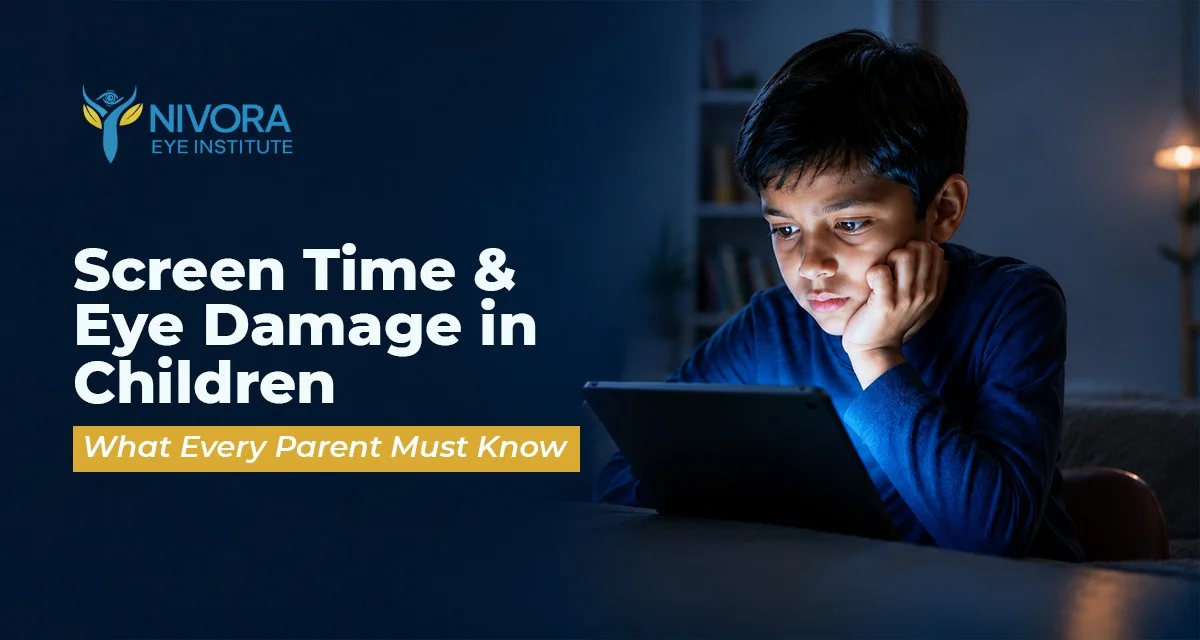
Screen Time & Eye Damage in Children: What Every Parent Must Know
Being a parent, it has happened a hundred times that you've had to scold your child and tell him, "Move the phone further!" or "Move further from the TV." If you are concerned about how all these screens may be affecting your child's eyes, then you are in no way alone.
The current generation of children is raised in a technological age. From smartphones to tablets and from computers to television and online learning platforms, all of these devices are now part of your child's life. While there are advantages of technology, too much screen exposure could have effects on eye health and cause vision-related problems.
Many parents worry about eye damage in children due to excessive screen use and its effects on their eyesight. And rightly so, because there is an increase in eye-related complaints in children due to screen use.
How Screens Affect a Child's Eyes
As children's visual systems are developing, exposure to screens may have negative effects on their eyesight due to strain on the visual organs, and thus eye damage in children.
What happens in the eyes of the child after continuous exposure to the screen?
• The eye muscles stay locked in one position: During screen use, the eyes remain focused at a close distance for long periods. This continuous near focusing can make the focusing muscles work harder and may lead to tiredness, headache, or blurred vision.
• Blink rate drops by half: Normally, we blink our eyes about 15 to 20 times per minute. However, when watching the screen for long, we might blink as few as 5 to 7 times.
• Blue light from screens can disturb sleep: Blue light emitted by digital devices can affect the child's ability to sleep. Excessive screen time prior to bedtime may fool the brain about daytime, thereby interfering with the sleeping process.
• All these problems may culminate in the problem known to physicians as "digital eye strain" or "computer vision syndrome."
Common Children Vision Problems from Screen Time
1. Digital Eye Strain
Using screens too much can lead to an increased risk of experiencing problems like eye fatigue, dry eyes, and eye strain, particularly in conjunction with bad viewing practices.
2. Nearsightedness (Myopia)
Doctors all over the world have observed an alarming increase in myopia cases among children. Studies indicate that excessive engagement in indoor tasks and the lack of outdoor activity among children can cause myopia to develop and worsen.
3. Dry Eyes
As a result of a failure to blink sufficiently, tears on the eyes dry up. This results in irritation within the eyes. In fact, many children are unaware that their eyes are dry – they just squint and rub them.
4. Sleep Disruption
The blue light from digital devices blocks the production of the hormone melatonin. As a result, when a child uses their device before sleeping, they will take a lot longer to fall asleep and will also experience a lower quality of sleep.
How Much Screen Time Is Too Much?
Doctors recommend:
• Ages 0 to 2 – Most pediatric health associations advise that children younger than 2 years old should not be exposed to screens, except for communicating via video with their families.
• Ages 2 to 5 – Total 1 hour daily of high-quality content.
• Ages 6 and older – No specified amount, but they shouldn’t use their screens more than their physical activities, sleep, or personal communication.
Here is a golden rule to keep in mind: After 20 minutes of looking at the screen, children need to look at something 20 feet away for 20 seconds. The 20-20-20 rule will be highly beneficial for you!
Simple Tips to Protect Your Child's Eyes
It is unnecessary to eliminate screen use; rather, it's all about forming healthy routines. To begin with, here are some tips for you:
• Keep screens at arm's length. Place screens farther. Place your child’s tablet and phone at a certain distance from his/her eyes (preferably equal to one arm’s length).
• Increase font size. Small fonts mean the eyes need to work harder. Increase text sizes on your child's gadgets.
• Use good lighting. Have proper illumination. Your child shouldn’t use a screen in a dark environment. Proper light helps reduce eye strain.
• Encourage outdoor play. Studies show that children who spend at least 1 to 2 hours outdoors every day have a much lower risk of developing myopia.
• Make screen-free zones. Keep bedrooms and dining tables free of phones and tablets. This protects both sleep and family time.
• Get regular eye checkups. Many vision problems start without obvious symptoms.
Schedule regular eye tests. Most visual problems begin without any symptoms whatsoever.
When Should You See a Doctor?
If your kid exhibits these symptoms, it's time for him/her to have his/her eyes checked:
• Regularly rubbing their eyes
• Experiencing headaches after attending classes or viewing screens
• Straining their eyes to read from the blackboard or the television
• Holding their electronic devices too close to their face
• Feeling fatigued after visually demanding activities
• Don’t wait until the condition gets serious; prevention is better than cure.
Final Thoughts
It should be understood that there is no way around screen use for your kid because they require this technology for education, entertainment, and communication. What you do not want is to deprive them of device use, but rather educate them on using screens without damaging their eyesight.
Nivora Eye Hospital has been helping children develop and protect their vision for more than 37 years now. We know all the challenges that modern kids face when it comes to taking care of their eyes.
So if your child complains of headache, eye strain, blurred vision, frequent eye rubbing, or difficulty seeing the board at school, schedule a pediatric eye checkup at Nivora Eye Hospital. Early evaluation can help detect children’s vision problems before they affect learning and daily comfort.