How to Choose the Best Eye Hospitals in Dehradun
To choose the right eye hospital in Uttarakhand, one must ensure that the hospital has experienced and qualified doctors, the latest advanced diagnostic and surgical technology, an array of treatment options and good reviews from patients. Hospitals which possess the NABH certification and a proven history of success can be considered the best.
Picking an eye hospital isn't something most people think about until they actually need one. And when that moment comes, it can feel a bit overwhelming — especially in a state like Uttarakhand where options vary quite a bit in terms of quality, technology and expertise. Whether it's a routine check-up, a growing concern about cataracts or something more serious like glaucoma or a retinal issue, the hospital you choose can genuinely shape your outcome. If you're based in or around Dehradun, you're actually in a relatively good spot — the city has some solid eye care options. But knowing what to look for still matters. So let's break it down simply. Finding the best eye hospitals in Dehradun doesn't have to be complicated once you know the right questions to ask.
Why Choosing the Right Eye Hospital Matters
Your eyes aren't something you want to experiment with. Unlike a routine health issue that might resolve on its own, most eye conditions — if left untreated or poorly managed — tend to get worse over time. Some, like glaucoma, can cause permanent vision loss before you even notice something's wrong.
Impact of Quality Eye Care on Vision Health
The quality of care you receive directly affects how well your vision is preserved. A hospital with experienced doctors and proper diagnostic equipment is more likely to catch something early, recommend the right treatment, and carry it out safely. On the other hand, delayed diagnosis or outdated methods can cost you — not just in terms of money but in terms of your vision. Good eye care is really about prevention as much as it is about treatment.
Key Factors to Consider When Selecting an Eye Hospital
Experience and Expertise of Doctors
This is probably the most important thing. You want to know who's actually going to be examining and treating you. Look at the doctor's qualifications, their area of specialisation and how many years they've been practising.
A surgeon who has done thousands of cataract or LASIK procedures is going to bring a very different level of confidence and precision to the table compared to someone who hasn't. It's also worth checking if the hospital has specialists for specific conditions because a general eye check and a retina surgery are very different things.
.
Availability of Advanced Technology
Eye care has moved quite fast in the last decade or so. Procedures that once required long recovery times and carried significant risks are now far more precise and minimally invasive — but only at hospitals that have invested in the right equipment. Things like corneal topography, OCT scans and modern phacoemulsification machines aren't optional extras anymore. They're what separate a good diagnosis from a guess.
Range of Treatments Offered
Not every eye hospital covers everything. Some are great for routine care but may not have the setup for complex retina surgeries or paediatric eye issues. Ideally, you want a hospital that can handle your current concern and also has the capabilities for other conditions if needed. It saves you the trouble of running between different places.
Patient Reviews and Success Stories
What do actual patients say? Reviews on Google or the hospital's website give you a real sense of the experience — wait times, how staff treats people, whether post-operative care was adequate and so on. They're not perfect but they're a good gut-check. A good eye specialist in Dehradun will consistently have patients speaking positively about both results and bedside manner.
Common Eye Treatments Available in Uttarakhand
Most reputed eye hospitals in the region today offer a fairly comprehensive set of treatments. Here's a quick look at what you can typically expect:
• Cataract Surgery — including advanced phaco and premium lens implants
• LASIK & Laser Vision Correction — various types like Femto LASIK, Contoura and ICL
• Glaucoma Treatment — ranging from medication management to surgery
• Retina Services — for diabetic retinopathy, macular degeneration and more
• Keratoconus Management — including corneal cross-linking
• Paediatric Eye Care — for conditions like lazy eye, squint and myopia in children
• Dry Eye Treatment — often underdiagnosed but very treatable
For a broader understanding of what different eye conditions look like and how they're treated, this blog on common eye problems and the best treatments available today is a good read.
Why Modern Technology Matters in Eye Care
This deserves its own section because it genuinely makes a difference. A lot of patients focus only on the doctor's name and overlook the tools they're working with. But even the most experienced surgeon can only do so much with outdated equipment. Modern diagnostic tools allow for earlier, more accurate detection — and that changes everything for conditions like glaucoma where timing is everything.
Surgical technology matters too. Bladeless LASIK, for instance, is significantly more precise than older blade-based methods. US-FDA approved laser systems bring an added layer of safety validation. Advanced phaco machines for cataract surgery reduce the chance of complications and speed up recovery.
In short — the latest technology a hospital uses tells you a lot about how seriously they take patient outcomes.
Why Patients Trust Nivora Eye Hospital
Experience and Expertise of Doctors
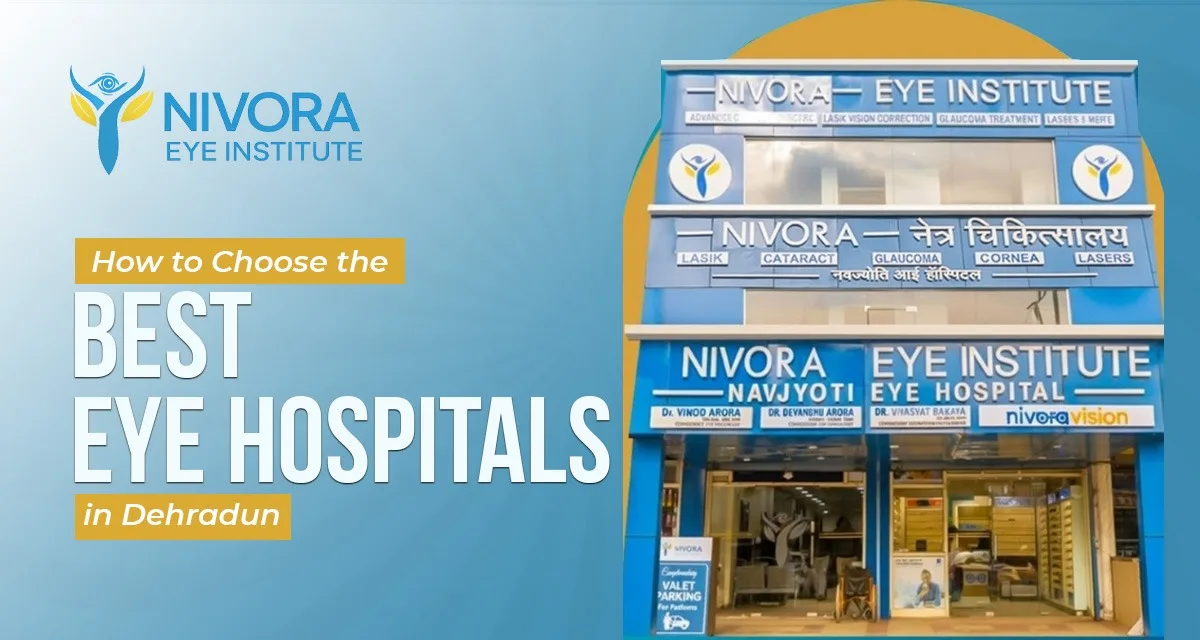
Nivora Eye Hospital has been providing eye care in Dehradun since 1989 — originally under the name Navjyoti Eye Hospital. That means that the institute has over thirty years of clinical experience. The institute is led by Dr. Vinod Arora, a renowned expert on cataracts and refractive surgery who was one of the first specialists in the region to perform spectacle removal surgery. Such an institute with such a long history and such a knowledgeable surgeon is hard to come across.
Advanced Diagnostic and Surgical Facilities
Nivora makes use of the latest UD-FDA-approved lasers for LASIK operations and diagnostic equipment includes such things as OCT machine, Zeiss visual field analyser, optical biometers and fundus cameras. These aren't just fancy names — they translate to more accurate diagnoses and safer surgeries. They've performed over 35,000 LASIK surgeries and 30,000 cataract procedures which speaks to both scale and consistency.
Patient-Centric Approach
One of the notable things about the institute is the patient-centric approach that it follows. Patients are provided with adequate consultations, all doubts are clarified, options are offered clearly and a proper post-surgery follow-up is performed which even includes free consultation for six months after the operation.
Comprehensive Vision Care Under One Roof
From routine eye check-ups and paediatric care to complex retina procedures and laser vision correction, Nivora covers the full spectrum of eye care services. Patients don't have to go elsewhere for a second opinion on a different eye condition — the expertise is all in one place.
Conclusion
Choosing the right eye hospital really comes down to a handful of things — qualified doctors, the right technology, a wide treatment range and a track record patients actually trust. These factors don't just affect your comfort during the visit; they determine how well your vision is protected in the long run.
If you're looking for the best eye hospitals in Dehradun, Nivora Eye Hospital ticks all of these boxes. With 36+ years of experience, NABH accreditation, US-FDA approved technology and over a lakh satisfied patients across Uttarakhand and North India, we bring together everything this blog has been talking about — under one roof. Whether you're dealing with cataracts, looking into LASIK or just need a thorough eye examination, Nivora is set up to give you the kind of care your eyes deserve.
Also read: Top 10 Eye Hospitals in Uttarakhand You Should Know About
FAQs
Q1. How do I choose the best eye hospitals in Uttarakhand for my treatment?
Look for hospitals with experienced ophthalmologists, modern diagnostic and surgical equipment, a wide range of treatments, NABH accreditation and genuine patient reviews. A hospital with a long history of successful outcomes in the region is generally a reliable choice.
Q2. What qualifications should an eye specialist in Dehradun have?
An eye specialist should hold an MBBS degree followed by an MS or DNB in Ophthalmology. Additional fellowships in specific areas like retina, cornea or glaucoma are a plus. Years of clinical experience and a record of successful surgeries also matter a great deal.
Q3. Which eye conditions are commonly treated at a modern eye hospital?
Most well-equipped eye hospitals handle cataracts, glaucoma, diabetic retinopathy, macular degeneration, keratoconus, refractive errors, dry eyes, squint and paediatric eye conditions. Some also offer LASIK and other laser vision correction procedures.
Q4. What eye care services should a reputed eye hospital offer?
A good hospital should offer comprehensive eye examinations, surgical procedures like LASIK and cataract surgery, retina and glaucoma care, paediatric eye services, dry eye treatment and proper post-operative support.
Q5. How important is advanced technology when selecting an eye hospital?
Very important. Modern equipment improves diagnostic accuracy and surgical precision which directly affects outcomes. US-FDA approved laser systems, OCT machines and advanced phaco technology are some markers to look for.
Q5. What questions should I ask before booking an eye consultation?
Ask about the doctor's qualifications and experience, what diagnostic tools are used, what treatment options are available for your specific condition, approximate costs, whether insurance is accepted and what post-surgery support looks like.