How the Best Eye Clinic in Dehradun Ensures Accurate Diagnosis?
Your vision requires more than an eye check-up. It requires a proper assessment & treatment by specialists.
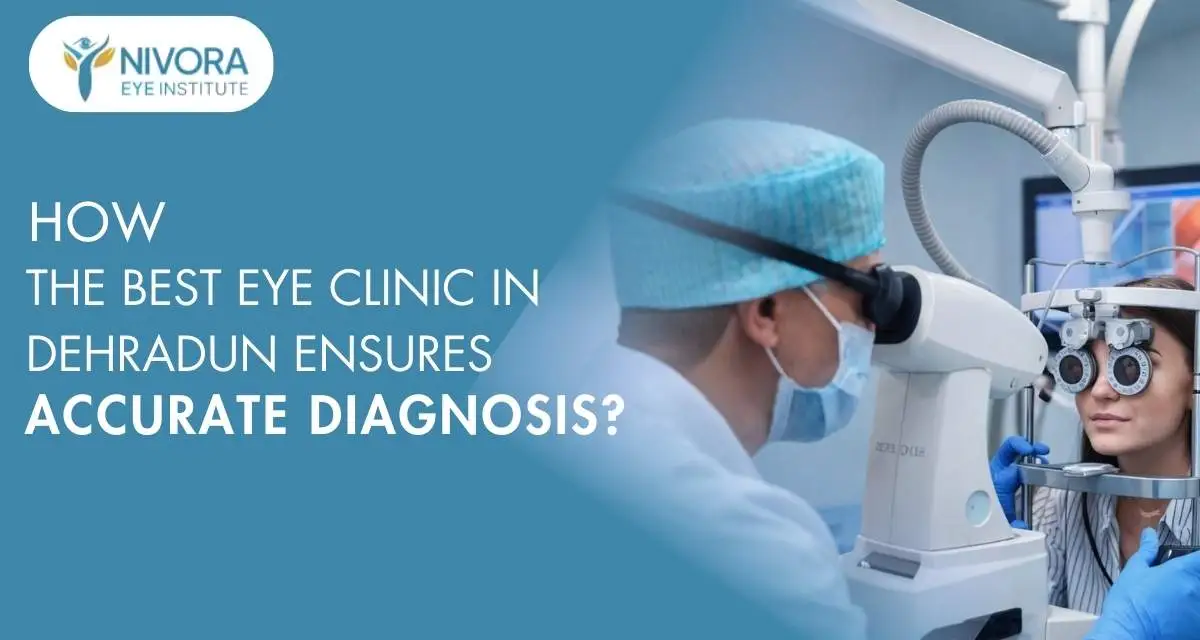
For this reason, the best eye clinic in Dehradun provides proper diagnosis with advanced diagnostic tools, eye check-ups & specialised staff who detect potential issues at an early stage. This helps prevent complications, determine the correct treatment & maintain your vision.
Why Accurate Diagnosis Matters in Eye Care?
Most eye issues progress silently. For example, issues such as glaucoma, retinal diseases or cataracts may not display any symptoms at early stages. If not diagnosed, the issue may worsen and lead to permanent vision loss.
That's why accurate diagnosis is important in eye care because it provides a foundation for proper management & treatment.
Other than this, an accurate diagnosis ensures
• Early detection of eye problems
• Correct diagnosis of vision disorders
• Early planning of treatments
• Prevention of avoidable vision loss
• Personalised care according to an individual’s eye anatomy
What Are the Advanced Technologies Used by Eye Clinics?
Accurate diagnosis in modern eye care is no longer dependent on basic vision charts alone. The best eye clinics today employ advanced imaging technology & accurate diagnostic equipment to analyse even the tiniest parts of the eye. These technologies enable early detection of diseases even before the symptoms occur.
Here are some of the most important technologies used for accurate eye assessment.
1. Optical Coherence Tomography (OCT)
OCT is a highly advanced, non-invasive imaging test that gives a detailed cross-sectional view of the retina. It enables the doctor to view early symptoms of macular degeneration, diabetic retinopathy, retinal swelling & glaucoma-induced nerve damage. The level of detail provided by OCT is crucial for early treatment.
2. Digital Retina Imaging
High-resolution retinal cameras take detailed pictures of the back of the eye. These pictures enable the doctor to track changes in the blood vessels & monitor retinal disease. It is particularly important for diabetic & high blood pressure patients.
3. Visual Field Analysis
This test checks the side vision of the patient & is crucial in the diagnosis & monitoring of glaucoma. Since glaucoma often damages the side vision, this test is very important in preventing unnoticed vision loss.
4. Applanation Tonometry (Eye Pressure Testing)
Intraocular pressure measurement is a very important step in glaucoma testing. Even slightly high eye pressure can lead to optic nerve damage if not treated on time. Periodic pressure testing ensures early detection & timely treatment.
5. Corneal Topography
This advanced technology is used to create a precise topographic map of the cornea. It is most useful before refractive surgeries such as LASIK & in testing corneal disorders such as keratoconus.
6. Auto-Refraction & Subjective Refraction
These tests help determine the exact lens power required for proper vision. While auto-refraction gives a digital reading, subjective refraction testing ensures accuracy by fine-tuning the reading based on patient responses.
Though highly advanced machines give extremely accurate readings, accuracy lies in the interpretation of those readings. Modern technology improves clarity but skilled professionals ensure that the results lead to the right treatment choices.
After all, accurate diagnosis is more than just detecting a disease. It’s about understanding it early, observing it closely & treating it responsibly.
Role of an Experienced Eye Specialist in Dehradun
While machines provide data, interpretation requires skill & experience. An experienced eye specialist in Dehradun knows how to relate symptoms, test results & patient history to arrive at the right diagnosis.
Their experience helps in
• Diagnosing glaucoma in the early stages before blindness occurs
• Detecting minute retinal irregularities
• Distinguishing between conditions that look similar
• Recommending the best course of treatment
• Avoiding over- or under-treatment
Additionally, an experienced specialist also knows when further testing is required & when a patient just needs to be reassured.
Signs You Should Visit the Best Eye Clinic in Dehradun
Some symptoms should never be overlooked. This is because, if minor symptoms are not checked, they could turn out to be serious problems.
Hence, you should make an appointment with an eye specialist if you notice any of the following symptoms
• Frequent headaches
• Blurred or double vision
• Difficulty seeing at night
• Eye strain from using a computer or TV
• Seeing sudden flashes or floaters in the eyes
• Sensitivity to light
• Family history of glaucoma
Even if you do not notice any symptoms, it is important to have your eyes checked. This is especially true for children, people over 40 years of age & those with diabetes or high blood pressure.
Importance of Early Detection & Preventive Eye Care
Prevention is always better than cure & this is especially true in the field of ophthalmology. Many eye conditions lead to irreversible damage once they reach an advanced stage.
But early detection allows
- Management of glaucoma before optic nerve damage
- Management of diabetic eye disease before bleeding occurs
- Tracking the progression of cataracts
- Correction of refractive errors in children before academic performance is affected
Remember that while routine eye screening may seem simple, it is an effective means of preventing lifelong complications.
How to Identify the Best Eye Clinic in Dehradun for Diagnosis?
The quality of care you get is directly influenced by the choice of the clinic. Here are some key points to consider when looking for the best eye clinic in Dehradun
- Make sure the clinic uses the latest technology such as OCT, retinal imaging & visual field analysis.
- Make sure the specialists have the right qualifications & experience.
- A good eye clinic examines not only the vision power but also the eyes as a whole.
- The doctors should be able to clearly explain the findings, risks & treatment plans.
- Regular screening programs & follow-up care indicate a commitment to patient care.
Conclusion
Accurate diagnosis is the key to quality eye care. Without it, even the most advanced treatment may not give the desired result. Right from the latest imaging technology to the best clinical expertise, every aspect of diagnosis counts.
At Nivora Eye Hospital, patient assessment begins with a thorough examination using the latest diagnostic equipment & expert guidance. Here, it is not just about treating the current condition but also about being aware of potential risks & saving the future of one’s vision. With a systematic & preventive approach, we at Nivora ensure that every patient gets accurate, responsible & comprehensive eye care.
FAQs
Q1. How often should I get a comprehensive eye checkup?
Adults should undergo a full eye examination every 1–2 years. High-risk individuals may require more frequent visits.
Q2. What tests are included in a complete eye examination?
Here are a few tests that are commonly included:
- Vision testing
- Retina scan
- Eye pressure measurement
- Slit-lamp evaluation
- Optic nerve assessment
Q3. Why is early detection of eye diseases important?
Many eye diseases progress silently. Early detection helps prevent irreversible vision damage and ensures timely treatment.
Q4. Can modern machines alone ensure accurate diagnosis?
No. Technology provides valuable data, but expert interpretation by a qualified ophthalmologist is essential for precise diagnosis.
Q5. What should I check before choosing an eye clinic?
Before making a choice, evaluate:
- Clinic’s technology
- Doctor expertise
- Hygiene standards
- Transparency
- Preventive care approach